Electromagnetic Force Analysis of Fusion Reactor Vacuum Vessel (Case Study using ANSYS Maxwell)
Background: Plasma Disruption Phenomena and Electromagnetic Forces Acting on the Vacuum Vessel
Inside the vacuum vessel of a fusion reactor (in this context, referring to the vacuum vessel in a magnetic confinement type tokamak fusion reactor), a high-current plasma is confined. In the case of ITER, this current reaches 17 MA.
However, when a plasma disruption phenomenon (a phenomenon where the plasma disappears starting with a thermal quench) occurs, this 17 MA current vanishes in just a few to tens of milliseconds.
During the process of rapid decrease in plasma current, eddy currents are induced within the metallic vacuum vessel in a direction that cancels out this change, due to electromagnetic induction (Lenz's Law). The distribution of these eddy currents transiently spreads throughout the vacuum vessel, reaching current values comparable to the plasma just before disruption. In other words, the plasma current is not extinguished but can be considered to be 'handed over' to eddy currents in the vacuum vessel.
Meanwhile, the plasma is confined without touching the vacuum vessel walls, being trapped by the magnetic field generated by the toroidal field coils (magnetic field lines that are counter-clockwise when viewed from above the vacuum vessel). The eddy currents induced in the vacuum vessel during plasma disruption couple with this magnetic field that confines the plasma, generating Lorentz forces.
Due to these Lorentz forces, electromagnetic forces on the order of several kN to several MN are generated in the vacuum vessel. This electromagnetic force causes the vacuum vessel to deform, generating stress within it. If the stress exceeds the allowable limit, parts of the vacuum vessel may undergo plastic deformation or, in the worst case, fail. Therefore, calculating this electromagnetic force distribution through electromagnetic force analysis and evaluating the stress is an essential process in fusion reactor design. In fact, at ITER, the process of calculating electromagnetic forces through electromagnetic force analysis and using them as input for stress analysis is standardly incorporated.
This time, we will introduce a case study of analysing the electromagnetic force distribution of a vacuum vessel using ANSYS Maxwell.
Overview of the Analysis Model
- The plasma current distribution was recreated in Maxwell using the results of a separate plasma simulation, re-expressed as current filament-like current sources in the space where the plasma exists. By comparing contour plots at multiple time points, one can observe the change in current density distribution over time, that is, the process of the plasma disappearing while moving.
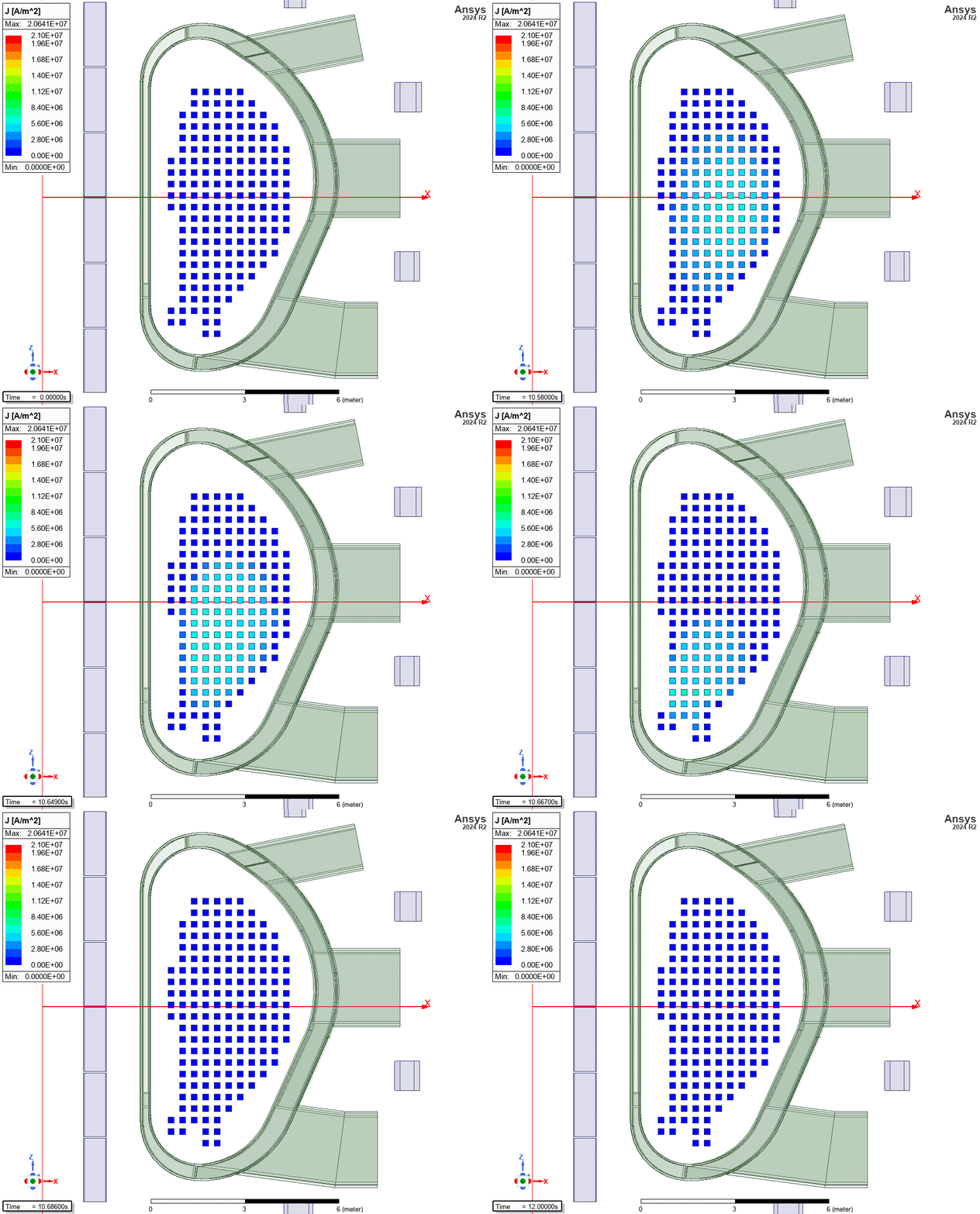
Time Variation of Plasma Current Density Distribution (Video)
- Current values are defined for each superconducting coil (toroidal field coil, poloidal field coil, central solenoid coil).
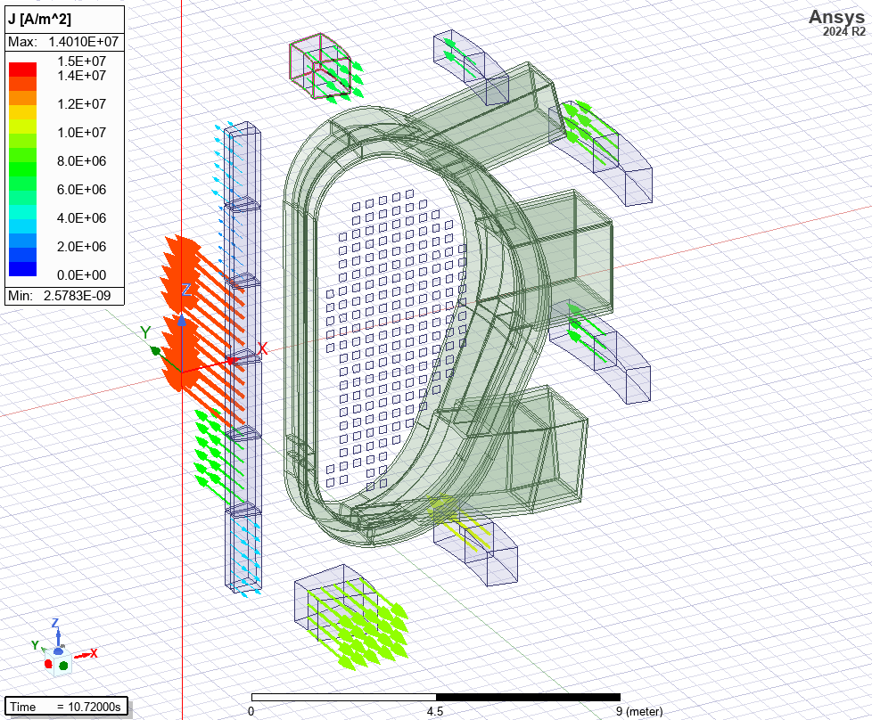
Current density vector for each superconducting coil
- The vacuum vessel has a thin double-shell structure, with ribs connecting the shells to ensure strength. Ports are provided in three tiers, similar to ITER.
- To reduce analysis costs, only 40 degrees of the 360-degree vacuum vessel is modelled, with periodic boundary conditions applied to both boundary surfaces.
Analysis results: Eddy current and electromagnetic force distribution in the vacuum vessel
Observing the eddy current distribution (current density vector) generated in the vacuum vessel, it can be seen that large eddy currents flow around the vacuum vessel in the parts closest to the plasma centre (where the current density is relatively high). Consequently, the eddy current distribution and the electromagnetic force distribution in the vacuum vessel also change. It can also be confirmed that the eddy currents rise with a slight delay from the change in plasma current. As mentioned above, the plasma centre moves over time, so the following shows the eddy current and electromagnetic force distributions at multiple time points. As time progresses, it can be observed that the regions with large eddy currents and electromagnetic forces move around the vacuum vessel.
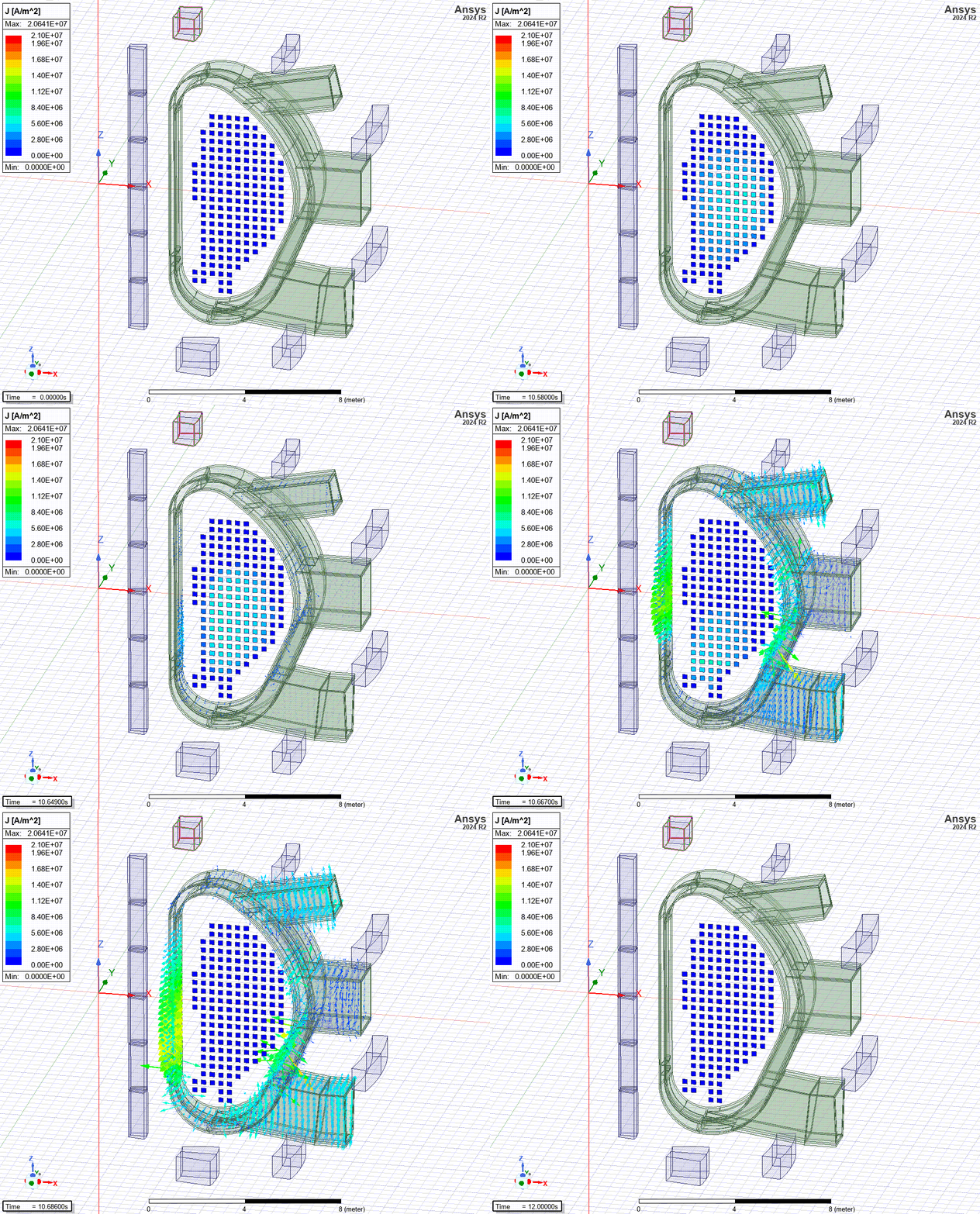
Eddy current distribution in the vacuum vessel (current density vector) (Movie)
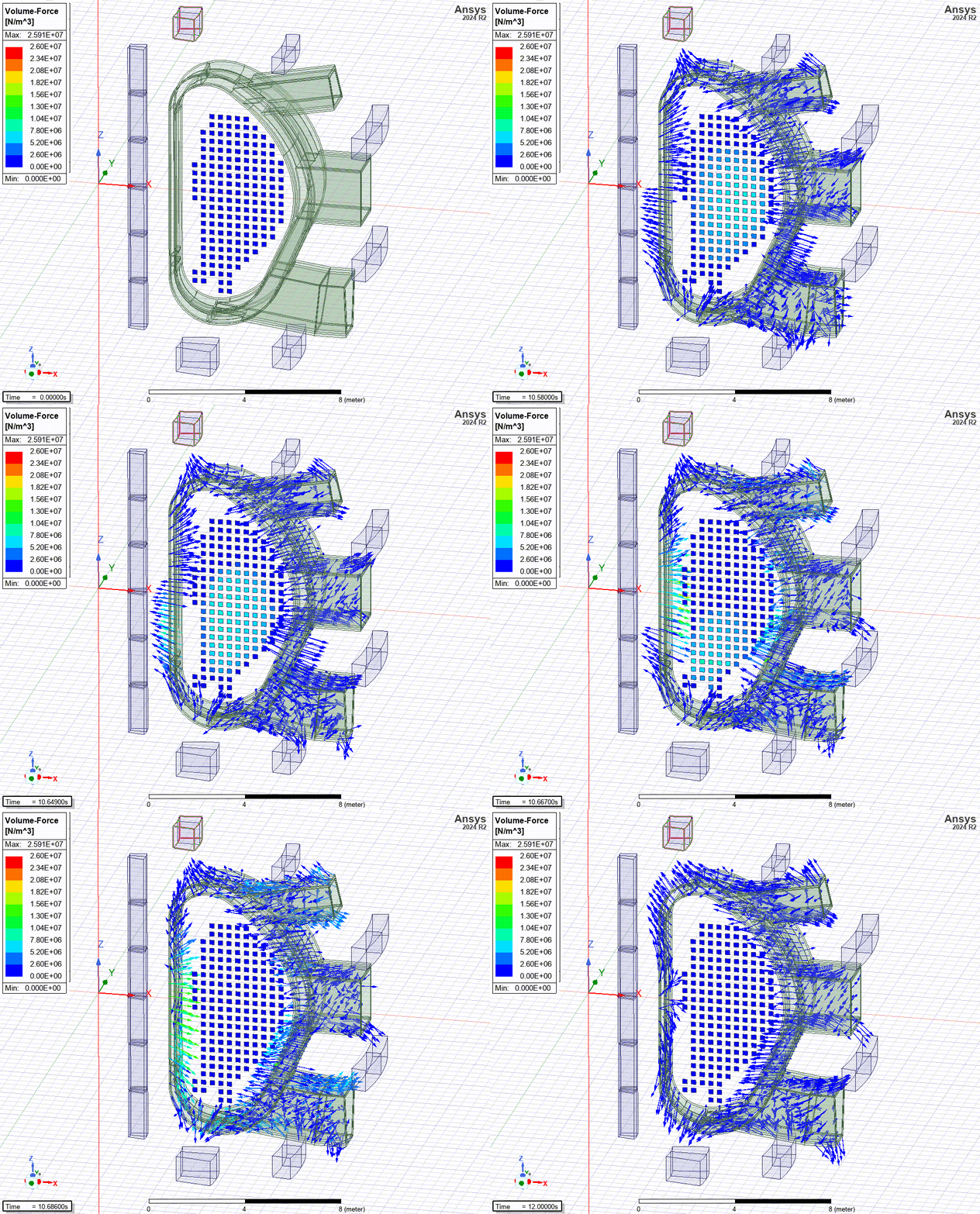
Electromagnetic force distribution in the vacuum vessel (body force density vector) (Movie)
This means that the stress distribution generated in the vacuum vessel also changes significantly over time, and the location where the stress is maximum also moves temporally. Therefore, it is understood that the arrangement of ribs needs to be carefully considered throughout the vacuum vessel.
Next Episode Preview
In the next issue, we will introduce an example of stress analysis of the vacuum vessel using the electromagnetic forces obtained here as input.
If you have any concerns regarding electromagnetic force analysis or structural analysis
Fusion Technologies can create, analyse, and evaluate electromagnetic force analysis models by leveraging its specialised knowledge of fusion reactors. We can provide comprehensive consultation, from evaluating electromagnetic forces during plasma loss, to analysing electromagnetic fields around superconducting coils, and evaluating the stress on structures such as vacuum vessels, blankets, and ports. Please feel free to contact us.